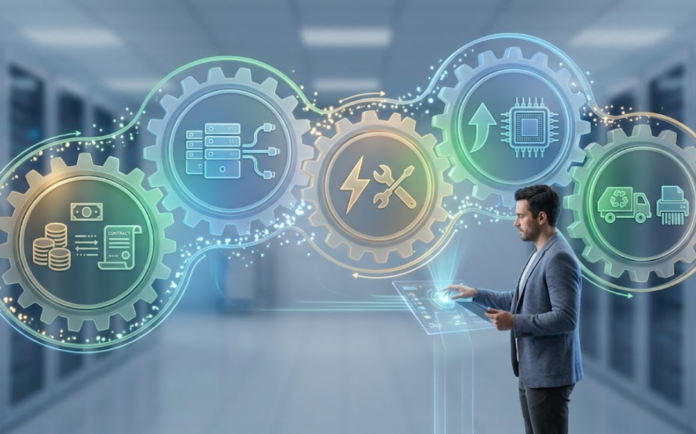

Managing IT assets throughout their entire lifecycle requires a clear understanding of total cost of ownership—from initial procurement through deployment, maintenance, and eventual disposal. Lifecycle costing for IT assets goes far beyond the purchase price, encompassing hidden costs that can significantly impact your IT budget and operational efficiency.
What Are IT Asset Lifecycle Costs?
IT asset lifecycle costs represent the total financial investment required to acquire, deploy, maintain, and dispose of technology assets throughout their useful life. This comprehensive approach to cost accounting helps IT managers make informed decisions about technology investments and optimize spending across the entire asset portfolio.
The lifecycle cost model includes both direct and indirect expenses associated with IT assets. Direct costs are easily identifiable expenses like purchase price, software licenses, and maintenance contracts. Indirect costs encompass less obvious expenses such as training, downtime, energy consumption, and opportunity costs from delayed implementations.
Understanding these costs is crucial for accurate budgeting, vendor negotiations, and strategic planning. Organizations that fail to account for total lifecycle costs often experience budget overruns and suboptimal technology decisions that impact long-term operational efficiency.
The Five Stages of IT Asset Lifecycle Costing
1. Planning and Procurement Costs
The initial stage encompasses all expenses related to identifying requirements, evaluating vendors, and purchasing assets. This includes staff time for research and evaluation, legal costs for contract negotiations, and procurement processing fees.
Key cost components include vendor evaluation activities, proof-of-concept testing, contract negotiation, and purchase order processing. Organizations should also factor in opportunity costs from delayed decisions and potential risks from choosing inappropriate solutions.
2. Deployment and Implementation Costs
Deployment costs extend well beyond the asset purchase price. Implementation expenses include configuration, customization, data migration, integration with existing systems, and user training.
Staff time represents a significant portion of deployment costs, including IT personnel for setup and configuration, end-user training programs, and potential consultant fees for specialized implementations. Organizations should budget for both planned deployment activities and contingency reserves for unexpected complications.
3. Operations and Maintenance Costs
Ongoing operational expenses typically represent the largest portion of total lifecycle costs. These include software licenses, maintenance contracts, support services, energy consumption, and staff time for administration and troubleshooting.
Regular maintenance activities encompass preventive maintenance, software updates, security patches, and performance monitoring. Organizations should also account for unplanned maintenance costs from hardware failures, security incidents, and emergency repairs.
4. Upgrade and Enhancement Costs
Technology assets require periodic upgrades to maintain performance, security, and compatibility with evolving business requirements. Upgrade costs include hardware refreshes, software version updates, capacity expansions, and feature enhancements.
Planning for upgrade cycles helps organizations avoid emergency purchases and negotiate better terms with vendors. Regular upgrades also help maintain asset value and prevent obsolescence that could require costly emergency replacements.
5. Disposal and End-of-Life Costs
Asset disposal involves more than simply discarding old equipment. Proper disposal requires data sanitization, environmental compliance, asset recovery value, and disposal service fees.
Organizations must ensure secure data destruction to prevent security breaches and comply with environmental regulations for electronic waste disposal. Asset recovery programs can offset disposal costs through equipment resale, recycling, or charitable donations.
Calculating Total Cost of Ownership (TCO)
Total cost of ownership provides a comprehensive financial framework for evaluating IT asset investments. TCO calculations should include all direct and indirect costs across the entire asset lifecycle, typically spanning 3-5 years for most IT equipment.
The basic TCO formula combines acquisition costs, operational costs, and disposal costs over the asset’s useful life. Acquisition costs include purchase price, implementation, and initial training. Operational costs encompass ongoing maintenance, support, energy, and staff time. Disposal costs factor in decommissioning, data destruction, and asset recovery value.
Accurate TCO calculations require detailed cost tracking and realistic assumptions about asset utilization, maintenance requirements, and lifecycle duration. Organizations should also consider time value of money by applying appropriate discount rates to future costs and benefits.
Cost Optimization Strategies
Standardization and Consolidation
Standardizing on fewer asset types reduces complexity and leverages economies of scale for better pricing, simplified maintenance, and reduced training requirements. Consolidated purchasing agreements with preferred vendors can secure volume discounts and improved support terms.
Preventive Maintenance Programs
Proactive maintenance strategies extend asset life and reduce unplanned downtime costs. Regular maintenance schedules, performance monitoring, and early replacement of wear components help prevent costly failures and emergency repairs.
Energy Efficiency Optimization
Energy costs represent a significant portion of operational expenses for IT assets. Implementing power management policies, selecting energy-efficient equipment, and optimizing data center cooling can substantially reduce ongoing operational costs.
Strategic Refresh Cycles
Planning asset refresh cycles based on TCO analysis rather than arbitrary timelines helps optimize replacement timing. Replacing assets before maintenance costs escalate or performance degrades significantly can reduce total lifecycle costs.
IT Asset Management Tools for Lifecycle Cost Tracking
Effective lifecycle cost management requires robust tracking and analysis capabilities. Modern IT asset management platforms provide comprehensive cost tracking, depreciation calculations, and TCO analysis features.
Leading solutions include ServiceNow IT Asset Management for enterprise environments, ManageEngine AssetExplorer for mid-market organizations, and InvGate Asset Management for comprehensive asset discovery and cost tracking. These platforms integrate financial data with asset inventory information to provide complete lifecycle cost visibility.
Key features to evaluate include automated cost allocation, depreciation tracking, vendor contract management, and TCO reporting capabilities. Integration with procurement and financial systems ensures accurate cost capture and eliminates manual data entry errors.
Best Practices for Lifecycle Cost Management
- Establish cost tracking standards: Implement consistent methodologies for capturing and categorizing all asset-related expenses
- Regular TCO reviews: Conduct periodic assessments to validate cost assumptions and identify optimization opportunities
- Vendor relationship management: Maintain detailed records of vendor performance, pricing trends, and contract terms
- Cross-functional collaboration: Involve procurement, finance, and operations teams in lifecycle cost planning and analysis
- Benchmark against industry standards: Compare your organization’s costs against industry benchmarks and best practices
Frequently Asked Questions
How long should IT asset lifecycle cost analysis cover?
Most IT assets should be analyzed over 3-5 years, depending on the asset type. Servers and networking equipment typically have 4-5 year lifecycles, while desktop computers and laptops are often refreshed every 3-4 years. Software assets may have longer lifecycles but require regular version upgrades.
What percentage of total lifecycle costs should be allocated to ongoing maintenance?
Ongoing maintenance typically represents 60-70% of total lifecycle costs for IT assets. This includes software licenses, support contracts, energy consumption, and staff time for administration. The exact percentage varies by asset type and organizational practices.
Should cloud services be included in lifecycle cost analysis?
Yes, cloud services require lifecycle cost analysis despite their operational expense model. Consider subscription costs, data transfer fees, integration expenses, staff training, and potential migration costs when changing providers. Cloud TCO analysis should include both direct service costs and indirect management overhead.
How can organizations reduce disposal costs for IT assets?
Implement asset recovery programs that maximize resale value through certified refurbishment partners. Ensure proper data sanitization to avoid security risks that could result in costly breaches. Consider charitable donations for tax benefits and partner with certified e-waste recyclers to ensure environmental compliance.
What role does depreciation play in lifecycle cost analysis?
Depreciation reflects the declining value of IT assets over time and should be factored into TCO calculations for accurate financial planning. Most organizations use straight-line depreciation over 3-5 years for IT equipment. Understanding depreciation schedules helps optimize replacement timing and budget planning.
Pricing accurate as of the publish date and subject to change. Verify current pricing on each vendor’s official site before purchasing.
